
Arhive autor: admin
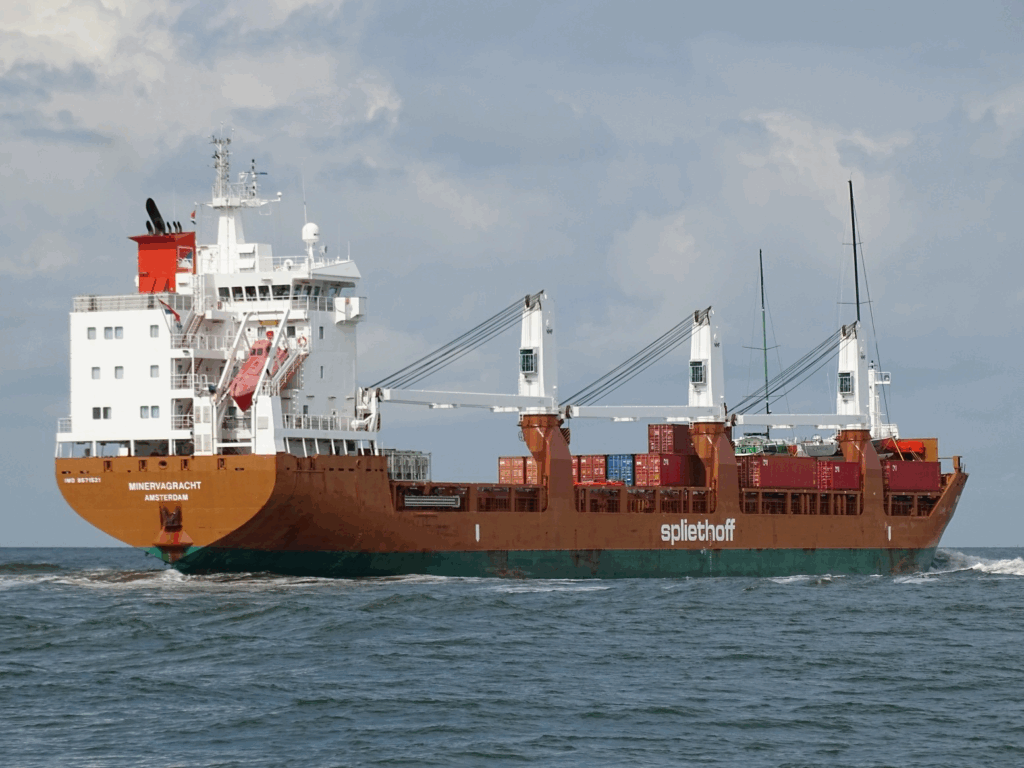
Crisis in International Waters
The Dutch-flagged general cargo vessel Minervagracht has sustained severe damage and is currently battling an onboard fire after being struck by an unidentified explosive device. The incident occurred on Monday in the international waters of the Gulf of Aden, as confirmed by the Amsterdam-based shipowner, Spliethoff.
At the time of the attack, the 12,232-dwt vessel was traveling eastbound from Djibouti. Although the ship was not carrying any cargo, the impact was significant enough to force an emergency evacuation.
Crew Rescue and Medical Status
All 19 crew members—comprising Russian, Ukrainian, Filipino, and Sri Lankan nationals—have been successfully evacuated from the burning vessel. The rescue operation was supported by nearby ships and military authorities.
According to Spliethoff’s latest statement:
-
Casualties: Two seafarers sustained injuries during the attack and were evacuated by helicopter to nearby vessels for urgent medical care.
-
Condition: The full extent of their injuries remains unknown at this time.
-
Family Support: The company is currently notifying the next of kin and providing support to the families of all crew members involved.
Security Context and Attribution
While no group has officially claimed responsibility for the assault, the French Maritime Information Cooperation & Awareness Center (MICA Center) identified the Iranian-backed Houthis as the perpetrators. This attack follows a failed missile assault on the same vessel just a week prior, on September 23, when a projectile landed in the water nearby.
Military reports from the United Kingdom Maritime Trade Operations (UKMTO) and EUNAVFOR Operation ASPIDES confirm that a warship is currently heading to the scene to secure the area and assess the vessel’s status.
Ongoing Recovery Efforts
The Minervagracht remains adrift and on fire as Spliethoff coordinates with international authorities and maritime specialists to safeguard the ship. In a statement released Tuesday, the company expressed deep concern over the escalating violence in the region and extended its gratitude to the crews of the merchant vessels that assisted in the swift rescue of their seafarers.
The Gulf of Aden continues to be a high-risk zone, with the UKMTO highlighting that such incidents have a direct and escalating impact on global mariners and Middle Eastern trade routes.
Source: Official statements from Spliethoff, UKMTO, and the MICA Center.
I ntroduction to Maritime Incidents and Claim Foundations
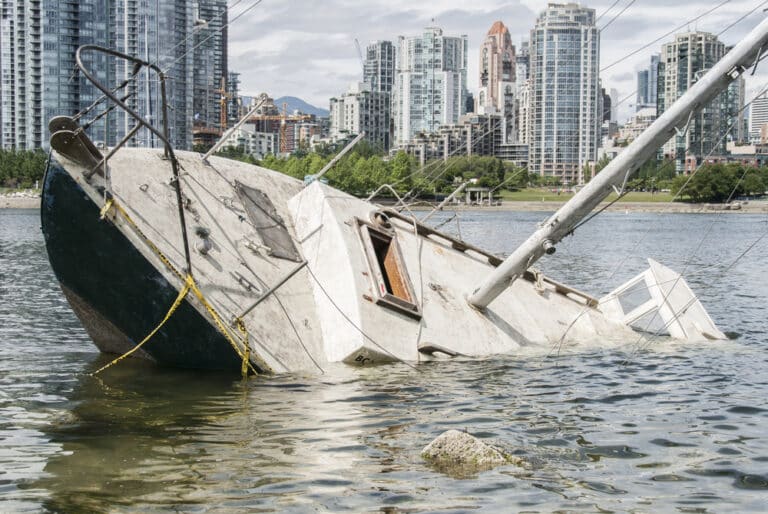
Boating accidents often leave a trail of devastating consequences, ranging from severe physical trauma and property destruction to the tragic loss of life. Whether an incident occurs on a tranquil lake or the high seas, the inherent risks of maritime travel demand strict adherence to safety protocols. When an injury occurs, victims are thrust into a world of physical recovery compounded by dauntingly complex legal hurdles.
Recognizing the primary catalysts of these accidents and their legal ramifications is vital for those seeking justice. Partnering with a specialized maritime attorney is often the deciding factor in successfully managing these complexities and securing a favorable outcome in an injury claim.
Financial recovery in these cases is designed to address the significant costs associated with:
-
Traumatic brain and spinal cord injuries
-
Complex bone fractures and soft tissue damage
-
Severe emotional and psychological trauma
-
Fatalities and wrongful death expenses
Frequent Catalysts of Maritime Accidents
The majority of maritime incidents are rooted in human error or preventable negligence. Operator misconduct is a leading factor, often involving excessive speed, reckless maneuvering, failure to maintain a proper lookout, or operating while impaired by substances. Furthermore, inexperienced or distracted operators may neglect essential navigation rules or vessel maintenance, resulting in collisions, allisions (striking stationary objects), or capsizing. Beyond human error, accidents are frequently caused by mechanical failure, hazardous weather, vessel overcrowding, or a lack of functional safety equipment.
Navigating Liability and Legal Consequences
When a maritime injury is the result of an operator’s negligence or a third party’s wrongful act, the law provides a pathway for accountability. Victims are entitled to pursue claims for medical costs, lost earning capacity, and general pain and suffering. However, these cases are rarely straightforward; they are governed by specialized maritime regulations that differ fundamentally from land-based personal injury laws.
Establishing liability requires a forensic approach—analyzing vessel logs, operator history, weather data, and safety compliance. A proficient maritime lawyer is essential for gathering this evidence and negotiating with insurance carriers who often seek to minimize payouts.
The Role of Maritime Law in Accident Claims
Maritime law, or admiralty law, is a distinct legal jurisdiction governing activities on navigable waters. It operates under a unique set of statutes, such as the Jones Act and the Longshore and Harbor Workers’ Compensation Act, alongside various international treaties. These laws are specifically crafted to handle the intricacies of navigation and maritime commerce, ensuring protection for passengers and crew alike.
At Lipcon, Margulies & Winkleman, P.A., our attorneys possess the specialized depth of knowledge required to navigate this intricate landscape. We understand that maritime cases demand a mastery of federal statutes and specific case law precedents. Our team meticulously investigates every incident, collaborating with maritime experts to build undeniable cases. Whether addressing safety violations or wrongful death, we provide tailored representation to ensure our clients secure the full justice and compensation they are entitled to under the law.
Source: Lipcon, Margulies & Winkleman, P.A. (www.lipcon.com)
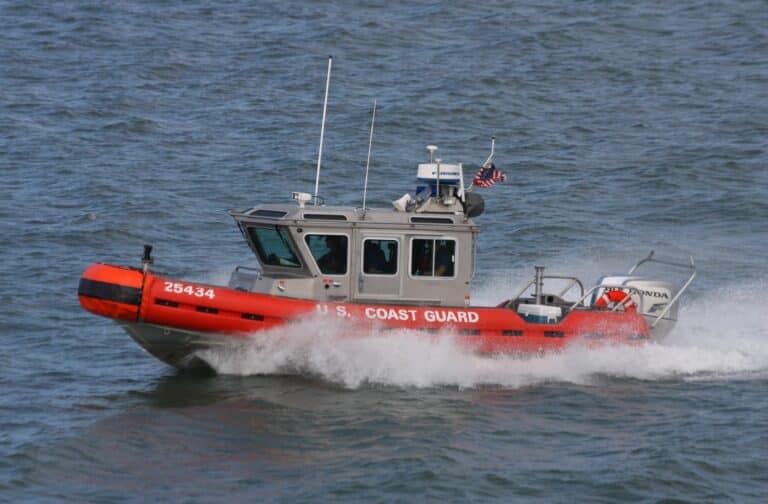
Accidents involving U.S. Coast Guard boats are frequently the result of high-speed maneuvers or improper vessel handling. Operating these powerful crafts at excessive speeds significantly elevates the risk of losing control, often leading to violent collisions with civilian boats, stationary docks, or submerged hazards. Such incidents typically occur during high-stakes patrols, emergency response missions, or training drills where safety protocols might be overlooked in the heat of the moment. These crashes often result in catastrophic injuries, fatalities, and extensive property damage.
While the Coast Guard is tasked with enforcing maritime safety, they are not above the law. Identifying the root cause of these accidents is the first step toward ensuring accountability when negligence is a factor. At Lipcon, Margulies & Winkleman, P.A., our legal team is prepared to pursue full compensation for victims facing mounting medical expenses, lost wages, and property repairs due to a Coast Guard-related incident.
Key Laws and Statutes Governing Coast Guard Operations
Coast Guard activities on U.S. waters are governed by a complex framework of federal and international regulations. These standards define the operational boundaries and safety expectations for every mission:
-
14 U.S. Code § 504: This statute grants the Coast Guard its general authority to conduct law enforcement and safety operations.
-
The Jones Act (Merchant Marine Act of 1920): Primarily protecting maritime workers, this act involves the Coast Guard in a critical regulatory capacity.
-
Federal Boating Safety Act: Sets the baseline for recreational safety, which the Coast Guard is responsible for enforcing.
-
COLREGs (International Regulations for Preventing Collisions at Sea): These are the „rules of the road” for international waters. Coast Guard vessels must follow these regarding right-of-way, signaling, and maintaining a safe speed.
-
U.S. Inland Navigation Rules: Specialized rules for safe transit within rivers, harbors, and lakes.
-
Standard Operating Procedures (SOPs): Internal Coast Guard protocols that dictate everything from vessel maintenance to crew communication and emergency drills.
-
Alcohol and Drug Policies: Strict federal mandates that prohibit the operation of any vessel under the influence, supported by mandatory testing.
While not every maritime accident is caused by a legal violation, a significant portion are. Our firm conducts exhaustive investigations into every collision to determine if any of these statutes were breached. If evidence of negligence is found, we utilize it as the foundation of a robust claim to hold the responsible parties liable.
Legal Recourse for Victims of Coast Guard Incidents
Individuals and families affected by a Coast Guard accident possess specific legal rights, including the right to sue for damages resulting from wrongful or negligent actions. Success in these cases generally requires proving „fault”—demonstrating that the Coast Guard personnel failed to act with reasonable prudence, directly causing the injury or loss.
When fault is established, victims may be eligible to recover compensation for:
-
Economic Damages: Comprehensive medical bills and lost current and future income.
-
Non-Economic Damages: Pain, suffering, and emotional distress.
-
Wrongful Death Claims: Funeral costs and loss of companionship for grieving families.
Navigating a claim against a federal entity requires specialized expertise. As the nation’s leading maritime law firm, we help families identify legal exceptions and build a compelling case to ensure they receive the maximum compensation allowed by law.
Source: Lipcon, Margulies & Winkleman, P.A. (www.lipcon.com)
Finding the right legal representation after a maritime incident is critical to the success of your claim. Boating accidents are governed by a complex intersection of state, federal, and international maritime laws that differ significantly from standard personal injury cases on land. To ensure your rights are protected, you need a firm with a proven track record, extensive resources, and specialized knowledge in admiralty law.
Why Choose Lipcon, Margulies & Winkleman, P.A.?
At Lipcon, Margulies & Winkleman, P.A., we provide world-class legal advocacy for victims of boating and maritime accidents. With our headquarters in Miami and seven strategically located offices nationwide, we are positioned to handle cases across the United States. Our firm is uniquely equipped to assist you, regardless of where your accident occurred.
Our credentials reflect our commitment to excellence:
-
Decades of Success: Since 1971, we have handled over 4,000 cases and recovered more than $500 million for our clients.
-
Award-Winning Expertise: Our team of 19 attorneys has been consistently recognized by US News & World Report as one of the “Best Law Firms”® every year since 2016.
-
Industry Leaders: Two of our members, Charles Lipcon and Jason R. Margulies, have achieved the rare honor of being named “Lawyer of the Year” in Admiralty and Maritime Law for Miami.
Specialized Representation for Maritime Claims
When you are searching for a lawyer, it is important to find a team that understands the unique demands of boating incidents. We offer dedicated support tailored to the specific regulations that apply to maritime law. Whether your accident involved a private recreational boat, a commercial vessel, or a personal watercraft, we provide robust legal strategies designed to protect your interests.
Our attorneys are highly trained in navigating the specific laws and safety standards that maximize financial recovery. From investigating vessel maintenance logs to analyzing operator behavior and compliance with U.S. Coast Guard regulations, we leave no stone unturned in building your case.
How to Get Started with Your Claim
If you or a loved one has been injured due to a boat operator’s negligence or reckless behavior, time is of the essence. Statutes of limitations in maritime law can be shorter than those in other fields, making early legal intervention vital.
We offer a no-cost, risk-free consultation to help you understand your options. Our goal is to hold dangerous or negligent parties accountable and help you secure the compensation you deserve for medical bills, lost income, and pain and suffering.
Contact the nation’s leading maritime attorneys today to discuss your case. You can reach us through our secure online contact form or by calling 877–233–1238 for a no-obligation evaluation of your claim.
Source: Lipcon, Margulies & Winkleman, P.A. (www.lipcon.com)
The legal team at Lipcon, Margulies & Winkleman, P.A. is committed to holding negligent parties accountable when they fail to adhere to critical boating safety protocols. Headquartered in Miami, Florida, with seven additional offices across the country, our firm is strategically positioned to provide legal assistance regardless of where your maritime incident took place.
Our roster of 19 distinguished attorneys has earned consistent recognition from „Best Lawyers”® and „Best Law Firms”® by US News & World Report for nearly a decade. Since our founding in 1971, we have successfully managed over 4,000 cases, recovering upwards of $500 million for our clients.
Furthermore, Lipcon, Margulies & Winkleman, P.A. celebrates the exceptional careers of Charles Lipcon (2020) and Jason R. Margulies (2025). Both have been honored as „Lawyer of the Year” in Admiralty and Maritime Law for the Miami region—a prestigious distinction shared by two members of our firm.
We provide specialized legal representation for maritime and admiralty claims, ensuring our clients benefit from a strategy tailored to the complexities of these jurisdictions. For those involved in boating accidents, we implement aggressive legal tactics designed to safeguard their interests. Because maritime accidents are governed by a unique framework of statutes, our attorneys are expertly trained in navigating these laws to secure maximum recovery. To help you understand the landscape of a typical maritime injury claim, we have outlined several key regulations below.
Primary Federal Regulations for Recreational Boating
The U.S. Coast Guard is responsible for enforcing federal safety standards to protect everyone on the water. All recreational craft, including personal watercraft (PWCs), must be equipped with Coast Guard-approved safety gear, such as life jackets (PFDs) for every passenger.
In many cases, vessel operators are required to finish certified safety courses to ensure they operate their boats responsibly. These educational programs, backed by the Coast Guard and national associations, cover vital topics like navigation protocols, weather monitoring, and emergency equipment usage. Adherence to these federal rules significantly lowers accident rates. In our professional experience, the vast majority of boating injuries are a direct result of failing to follow these basic regulations.
Variations in State-Specific Boating Laws
Boating legislation can change drastically across state lines, shaped by local water conditions and safety priorities. These rules are enforced by state administrators who focus on public safety. Major areas of variation include:
-
Mandatory Education: As of 2025, 36 states require some form of boater safety certification. For instance, New York now requires all motorized boat operators to hold a safety certificate. Many states use birth year thresholds to determine who must complete these courses.
-
Age Limits: The minimum age to operate a vessel varies; California requires operators to be at least 16, whereas Florida allows 14-year-olds to operate certain craft.
-
Required Safety Gear: While federal law provides a baseline, states often demand more. California, for example, requires specific fire extinguishers for any boat with enclosed fuel or engine spaces.
-
Operational Rules: States establish their own speed limits and „no-wake” zones. Florida enforces strict no-wake areas near marinas and environmentally sensitive zones to prevent erosion and protect local wildlife.
-
Licensing and Registration: Requirements for boat licenses and registration fees vary, with some states requiring a license for anyone in physical control of the boat.
Given these discrepancies, it is vital to understand the laws of the specific state where an accident occurred. A qualified maritime lawyer can provide the necessary clarity regarding your rights and obligations.
Frequent Legal Issues in Maritime Cases
Accidents Navigational incidents often occur when operators fail to act with reasonable prudence, particularly in crowded waterways or low-visibility conditions. Collisions are frequently linked to a failure to maintain a proper lookout or miscalculating the maneuvers of nearby vessels.
Injuries Injuries from boating accidents can range from minor abrasions to catastrophic trauma. Most of these incidents stem from reckless behavior, such as speeding or neglecting to use safety gear. Victims often face long-term medical recovery, making it vital to hold the responsible parties liable.
Negligence Legal negligence occurs when an operator fails to exercise the required standard of care. This includes careless operation or violating right-of-way rules. Part of „safe operation” involves taking every necessary action to prevent a collision. Proving negligence is the cornerstone of any successful claim for damages.
Source: Information provided via Lipcon, Margulies & Winkleman, P.A., a leading maritime law firm.