
-
Phone:
+1 203 212 9934 -
E-mail:
contact@europeancrewcenter.com
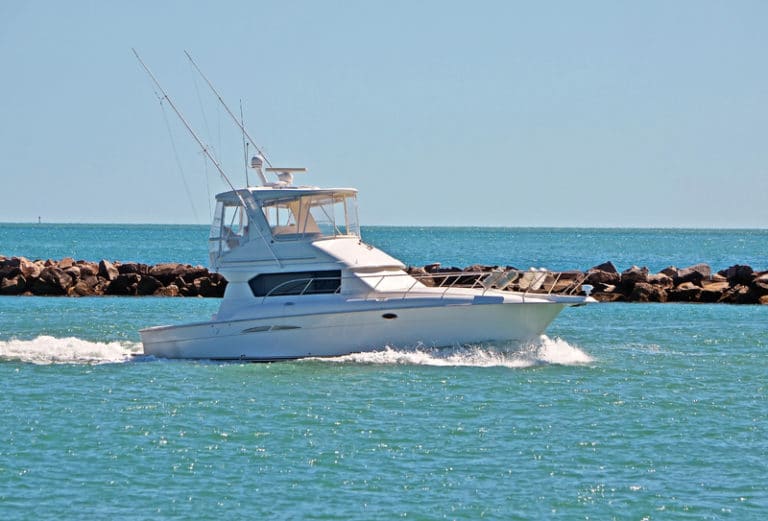
The legal team at Lipcon, Margulies & Winkleman, P.A. is committed to holding negligent parties accountable when they fail to adhere to critical boating safety protocols. Headquartered in Miami, Florida, with seven additional offices across the country, our firm is strategically positioned to provide legal assistance regardless of where your maritime incident took place.
Our roster of 19 distinguished attorneys has earned consistent recognition from „Best Lawyers”® and „Best Law Firms”® by US News & World Report for nearly a decade. Since our founding in 1971, we have successfully managed over 4,000 cases, recovering upwards of $500 million for our clients.
Furthermore, Lipcon, Margulies & Winkleman, P.A. celebrates the exceptional careers of Charles Lipcon (2020) and Jason R. Margulies (2025). Both have been honored as „Lawyer of the Year” in Admiralty and Maritime Law for the Miami region—a prestigious distinction shared by two members of our firm.
We provide specialized legal representation for maritime and admiralty claims, ensuring our clients benefit from a strategy tailored to the complexities of these jurisdictions. For those involved in boating accidents, we implement aggressive legal tactics designed to safeguard their interests. Because maritime accidents are governed by a unique framework of statutes, our attorneys are expertly trained in navigating these laws to secure maximum recovery. To help you understand the landscape of a typical maritime injury claim, we have outlined several key regulations below.
Primary Federal Regulations for Recreational Boating
The U.S. Coast Guard is responsible for enforcing federal safety standards to protect everyone on the water. All recreational craft, including personal watercraft (PWCs), must be equipped with Coast Guard-approved safety gear, such as life jackets (PFDs) for every passenger.
In many cases, vessel operators are required to finish certified safety courses to ensure they operate their boats responsibly. These educational programs, backed by the Coast Guard and national associations, cover vital topics like navigation protocols, weather monitoring, and emergency equipment usage. Adherence to these federal rules significantly lowers accident rates. In our professional experience, the vast majority of boating injuries are a direct result of failing to follow these basic regulations.
Variations in State-Specific Boating Laws
Boating legislation can change drastically across state lines, shaped by local water conditions and safety priorities. These rules are enforced by state administrators who focus on public safety. Major areas of variation include:
-
Mandatory Education: As of 2025, 36 states require some form of boater safety certification. For instance, New York now requires all motorized boat operators to hold a safety certificate. Many states use birth year thresholds to determine who must complete these courses.
-
Age Limits: The minimum age to operate a vessel varies; California requires operators to be at least 16, whereas Florida allows 14-year-olds to operate certain craft.
-
Required Safety Gear: While federal law provides a baseline, states often demand more. California, for example, requires specific fire extinguishers for any boat with enclosed fuel or engine spaces.
-
Operational Rules: States establish their own speed limits and „no-wake” zones. Florida enforces strict no-wake areas near marinas and environmentally sensitive zones to prevent erosion and protect local wildlife.
-
Licensing and Registration: Requirements for boat licenses and registration fees vary, with some states requiring a license for anyone in physical control of the boat.
Given these discrepancies, it is vital to understand the laws of the specific state where an accident occurred. A qualified maritime lawyer can provide the necessary clarity regarding your rights and obligations.
Frequent Legal Issues in Maritime Cases
Accidents Navigational incidents often occur when operators fail to act with reasonable prudence, particularly in crowded waterways or low-visibility conditions. Collisions are frequently linked to a failure to maintain a proper lookout or miscalculating the maneuvers of nearby vessels.
Injuries Injuries from boating accidents can range from minor abrasions to catastrophic trauma. Most of these incidents stem from reckless behavior, such as speeding or neglecting to use safety gear. Victims often face long-term medical recovery, making it vital to hold the responsible parties liable.
Negligence Legal negligence occurs when an operator fails to exercise the required standard of care. This includes careless operation or violating right-of-way rules. Part of „safe operation” involves taking every necessary action to prevent a collision. Proving negligence is the cornerstone of any successful claim for damages.
Source: Information provided via Lipcon, Margulies & Winkleman, P.A., a leading maritime law firm.
Formular cerere ofertă